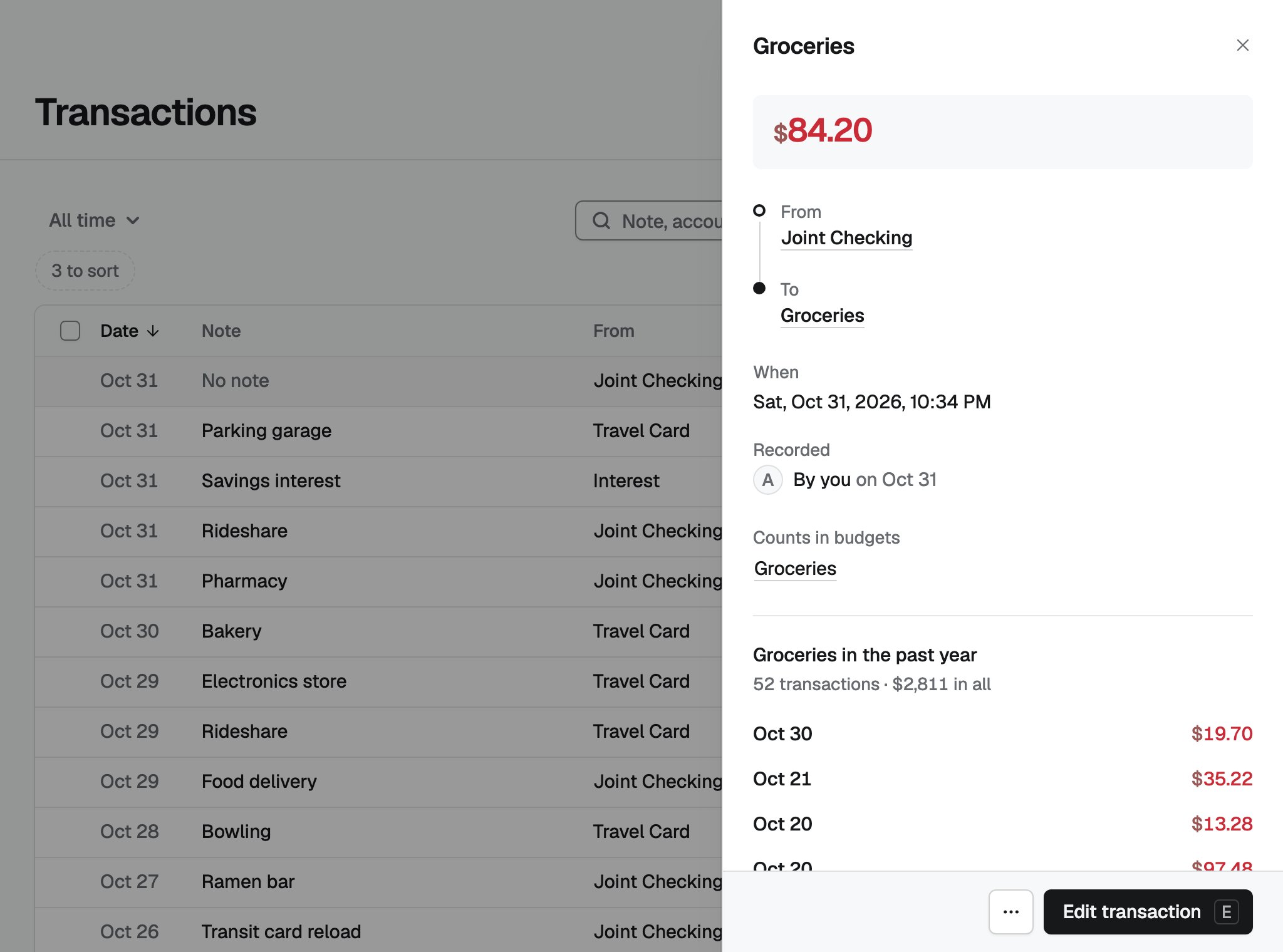
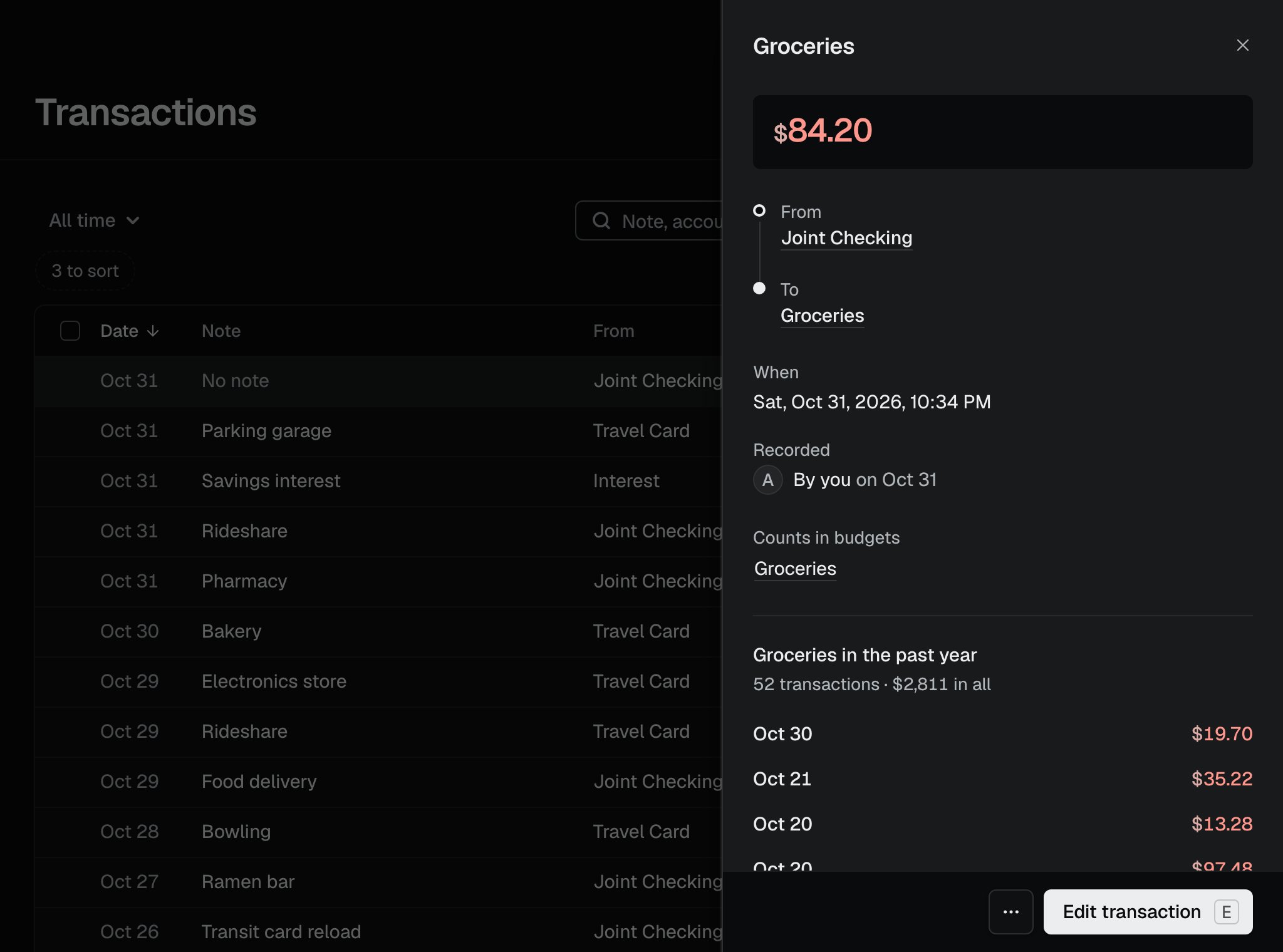
A diary of money (“spent ₹500 on groceries”) keeps one end of each transaction, so its total can only be trusted, never checked. Over time it drifts from what your bank shows. Double entry records both sides: every transaction has a From and a To, and what leaves one arrives at the other. Money can’t appear from nowhere or vanish. Household's transactions on the web with one open: $84.20 for groceries, from Joint Checking, an asset, to Groceries, an expense category. Household's transactions on the web with one open: $84.20 for groceries, from Joint Checking, an asset, to Groceries, an expense category.

What it gives you

  • Balances you can check. A hand-kept account’s balance on any day is the sum of its transactions. If it disagrees with your bank, Update Balance records the difference openly.
  • Where it came from. You see what you spent, and what you spent it from.
  • Paying a debt isn’t spending. A card bill moves money from Checking to the card, so it never counts against a budget; the spending was counted when you used the card.

A worked example

Checking starts March with ₹20,000: Checking holds ₹90,900, Groceries spent ₹4,100, and Salary brought ₹75,000. Every rupee is accounted for.

Debits and credits

Accountants call the two sides debit and credit. A debit is the To side; a credit is the From side. You never have to see either.