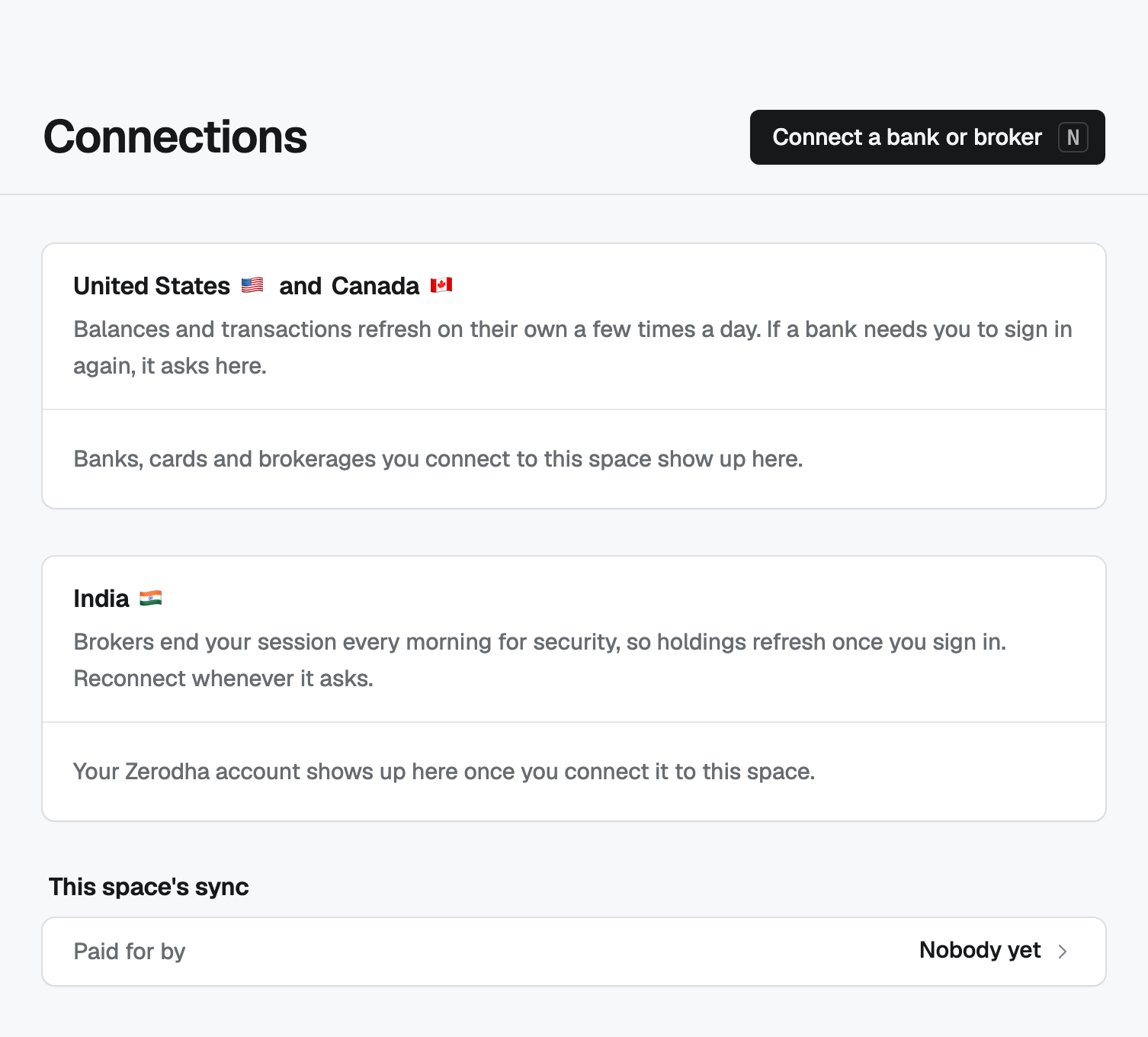
What a connection brings in, and when. Recontrol reads; it can never move money at your bank. Household's Connections on the web: banks, cards and brokerages in the United States and Canada, Zerodha in India, and who pays for the space's bank sync. Household's Connections on the web: banks, cards and brokerages in the United States and Canada, Zerodha in India, and who pays for the space's bank sync.

When

  • Banks send what’s new, usually a few times a day, and are checked once a day besides.
  • Zerodha refreshes at 10:00, 13:00 and 16:00 India time on weekdays, while you’re signed in; it signs you out every morning.
  • Only while a subscription sponsors the space.
A connected account’s balance is the bank’s, saved once a day to draw its history. Holdings break an investment’s value down; they’re never added a second time.

Where an imported transaction lands

A bank says which account a transaction touched, not what it was for. Recontrol places the other side, in this order:
  1. Your own history: where you filed this merchant recently. Move one, and later ones follow.
  2. Your category names, such as “Dining” for eating out.
  3. A model, if allowed: the merchant names, the bank’s category and your category names, never the amount, go to Anthropic to choose among your categories. Only if the person who linked the bank turned on AI features; see AI and your data.
  4. A broad new category, such as Groceries or Bills.
Transfers, loan payments and refunds stay with a side blank until you’ve filed that merchant once; they wait in Sort Your Spending.

When the bank changes its mind

Pending transactions aren’t brought in until they post. Each is dated the day you made it, when the bank says: a purchase on 31 October that posts on 2 November counts in October. A changed one is updated in place, keeping your category; a removed one is removed here too.